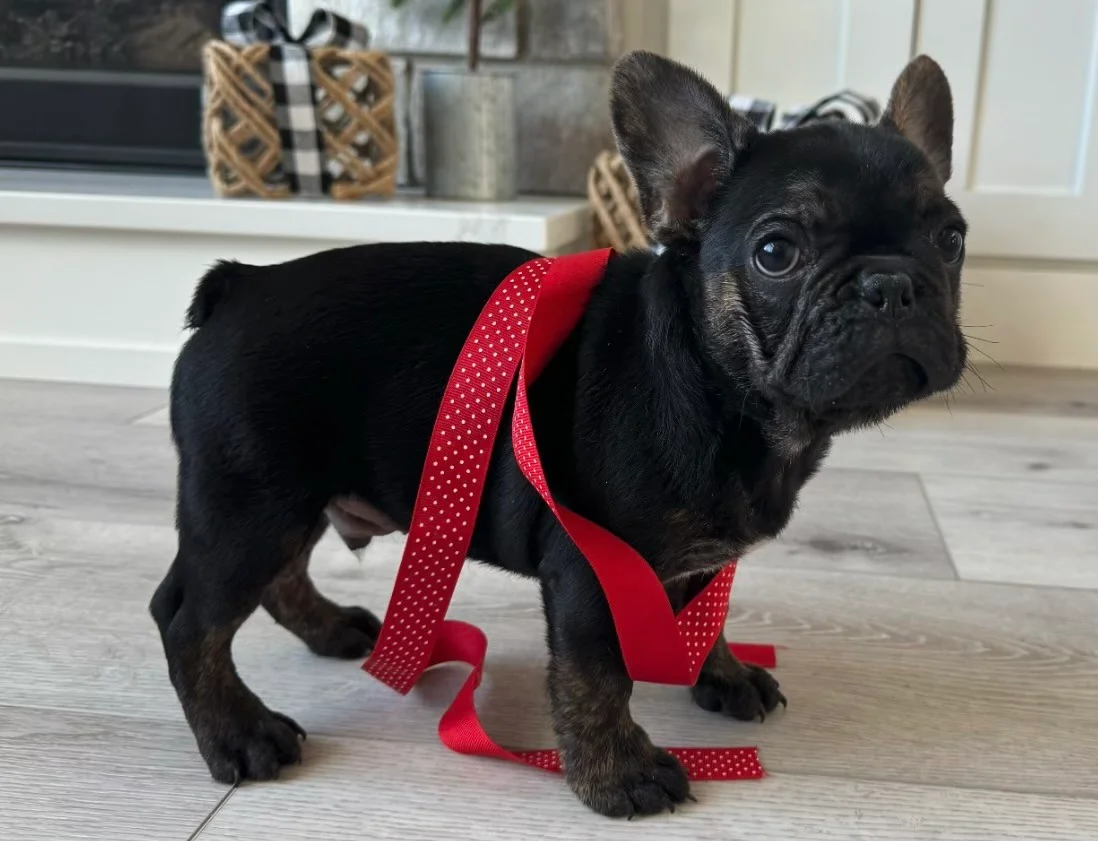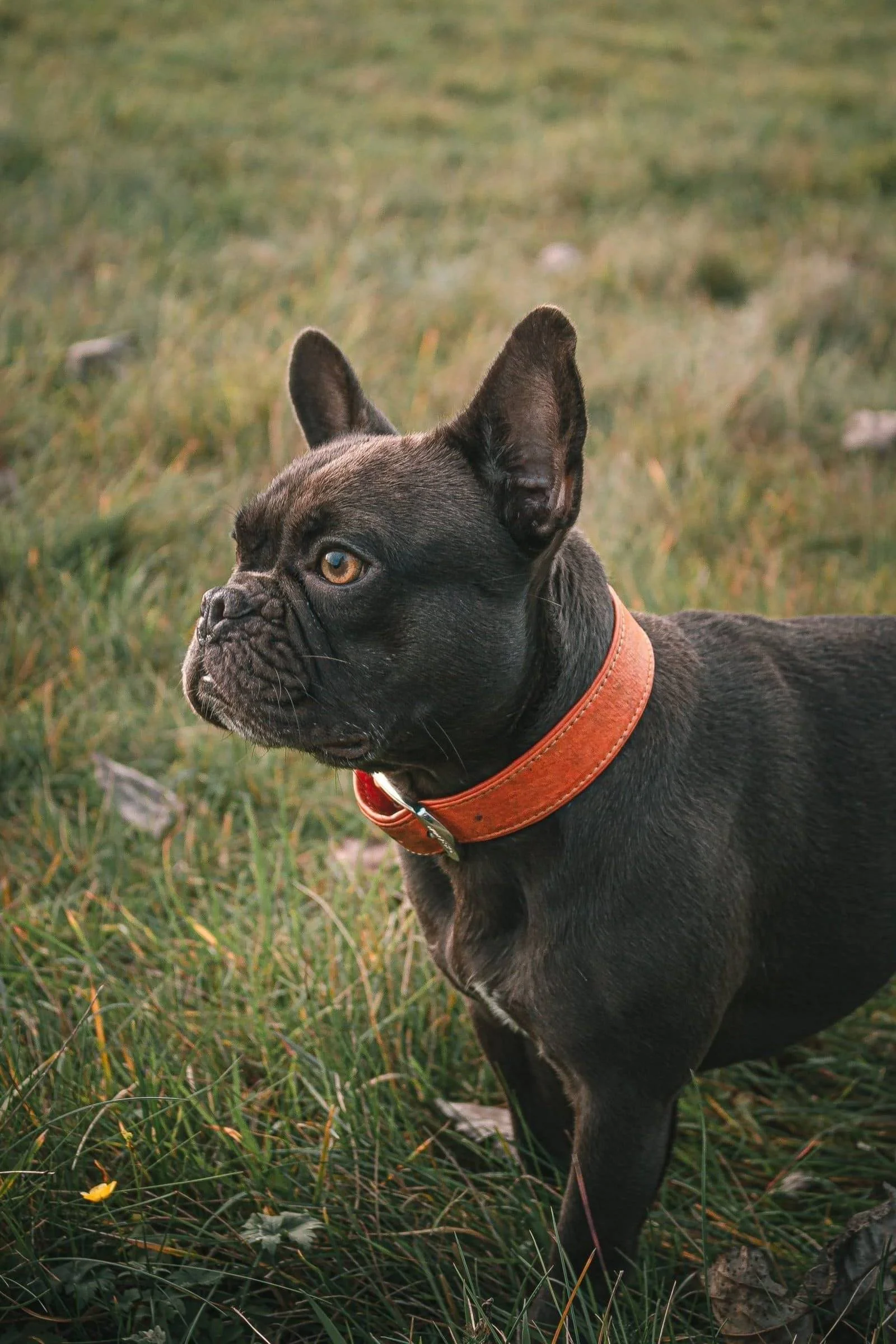

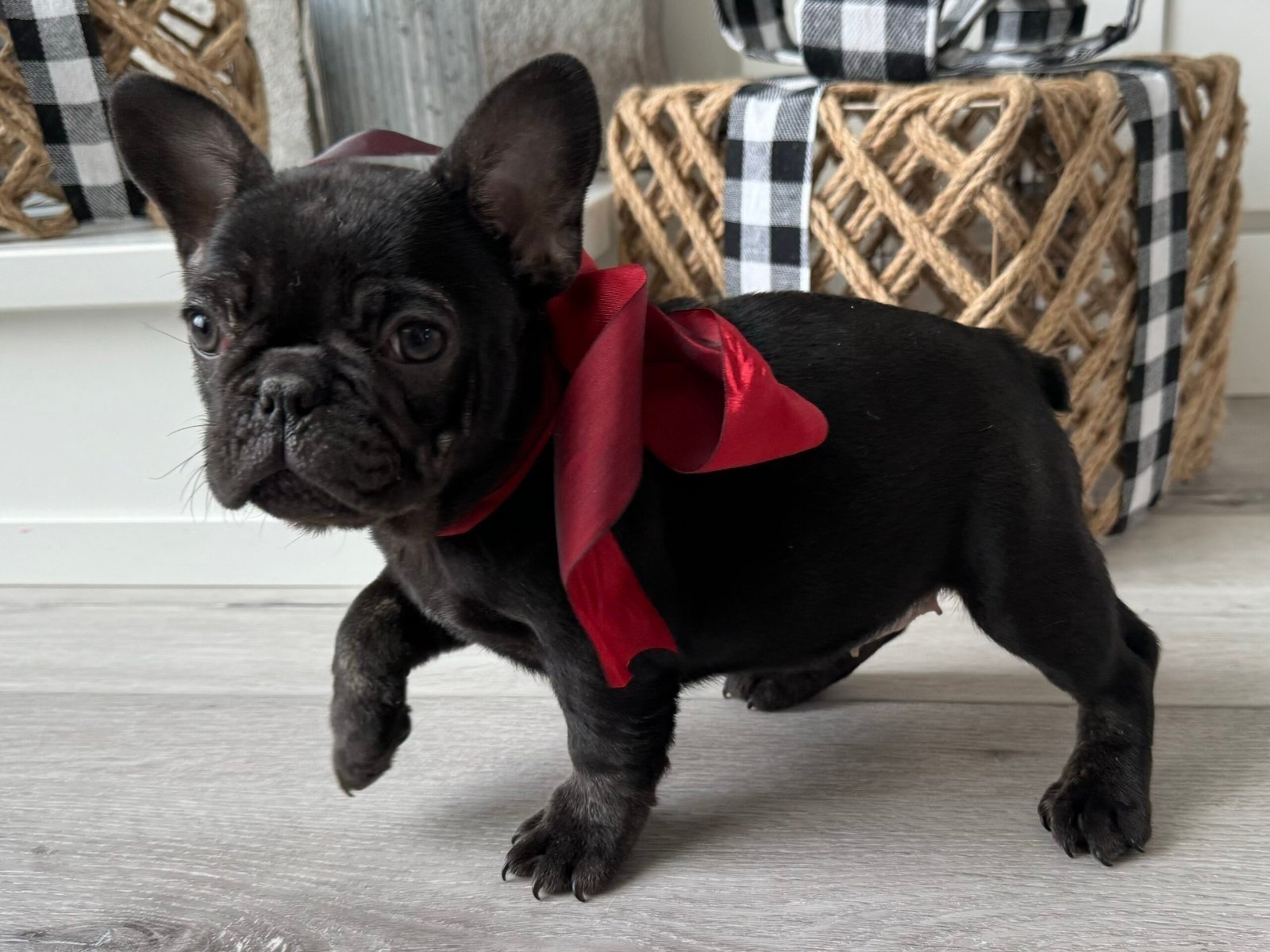
How often should I bathe my French Bulldog puppy, and what are their grooming needs? French Bulldogs sport a short and smooth coat that should be relatively fine to the touch. They do not require much grooming; however, we have provided some tips and suggestions that will help your Frenchie look and feel his/her best!
You do not want to over-wash your Frenchie and dry out natural skin oils. It is recommended that short-haired dogs, like your Frenchie, only bathe 2-5 times a year (but that doesn’t seem too realistic, does it?). We bathe our Frenchies on an as-needed basis (which is generally once a month), but we regularly spot clean them with wet washcloths or wet wipes (unscented and for sensitive skin). Their behinds occasionally need to be wiped clean as well, as do any other breed's.
The bottom line is that they should be washed as needed, and if your acceptance level of what is appropriate cleanliness is different than ours, it should not be a problem.
Best shampoo for French bulldogs There is quite a range of latitude in bathing frequency. However, since Frenchies (at least ours) don’t seem to have the disgusting habit of rolling around in poo or every dead or nasty thing they find, they don’t tend to get too dirty (especially since they spend a lot of time indoors), and frequent bathing is not necessary or desirable. (Unfortunately, they sometimes do have the even more disgusting habit of making a snack of a fresh “dog log” and it will take a little work to break them of this.)
There are many good dog shampoos on the market, and it is really just a matter of personal preference. They can be purchased at any pet store, Walmart, etc. Years ago, when we owned a Yorkie, our vet recommended using baby shampoo because Yorkies tend to frequently get goop around the eyes, and the baby shampoo allowed us to clean the area around their eyes without irritating them.
We still use baby shampoo with our Frenchies since they have many folds on their faces that require regular cleaning. If you decide to go with a dog shampoo, choose a mildly formulated shampoo for sensitive skin; your vet may have some good recommendations.
French Bulldogs are short-haired and have a single coat, so, fortunately, they do not shed as much as most breeds. Brushing their coat regularly with a rubber brush will remove any dead or loose hair, which in turn will reduce the amount of shedding.
The wrinkles on your Bully’s face and their ears are really the only areas that require maintenance over and above other short-haired breeds. They are prone to becoming damp, and this is where infection can result. They can also collect dirt and food, which can cause infections. Ears should be flushed out every month or so and cleaned with Q-tips. If the wax looks thick and very dark, apply a few drops of Posatex or Mometamax to help prevent ear infections.
Utah has a very dry climate, so for us it is sufficient to regularly clean their folds with baby shampoo and then thoroughly dry them with a dry cloth. The frequency of maintenance varies from Frenchie to Frenchie, as well as climatic conditions. Frenchies with large, ropey wrinkling in a hot, humid environment would require the most attention, whereas a lightly wrinkled Frenchie in a cool, dry environment would require the least.
The most common approach to keeping the wrinkles dry after cleaning (if needed) is to use some form of talcum powder, such as baby powder, dispensed using a small brush such as a child’s toothbrush. It is recommended that you clean the wrinkles out at least once a week initially and then vary your schedule based on the requirements of each Frenchie.
Tear stains appear more prevalent on the lighter-colored Frenchies. There are many products on the market that claim to remove and/or prevent tear stain removal, but the most commonly referred-to method is the use of Desitin (yes, the same ointment used for the treatment of baby rash). The ointment is spread along the length of the stain, and after two or three weeks of application, the stains should have disappeared. Another home remedy is to apply a 50/50 solution of hydrogen peroxide to the affected area using a cloth or cotton ball. Care must be taken in both cases to ensure that neither gets into the dogs’ eyes.
The nose can be susceptible to drying out. The best way to remedy the dry skin on the nose is to regularly apply a smear of petroleum jelly (Vaseline) to the nose or use a commercial snout smoother. This keeps the nose dark and moist. Our vet also recommended vitamin E (just squeeze a little of the capsule), which we have found to work very well.
Generally, your puppy’s nails need trimming only about once a month, and it’s not much harder than trimming your own. If your dog is on cement most of the time, they probably won’t need clipping, except for the dewclaws. Some people do not feel comfortable clipping their dogs’ nails and will take them to a groomer or vet. However, if you want to save time and money, it is a fairly simple task that takes only a few minutes.
There are two types of clippers: a guillotine or a scissor type. The guillotine is the easiest to use. The instructions that come with the clippers will guide you on how to use the instrument. Light claws are easier to cut than dark claws, as the blood vessels and nerves that supply the toenail, called the quick, are easier to see. Cut the toenail to within approximately 2 mm of the quick. If you cut into the quick, the toenail will bleed, and the dog will experience pain—nothing serious, but they might not sit too still the next time you undertake this task.
When cutting dark toenails, it is better to cut just a little off at a time. Some Frenchie owners, who have dogs with dark toenails, cut them once every week or two so that they only have to cut off a little at a time, avoiding any fear of cutting into the quick. If you accidentally cut into the quick, no harm done. Bleeding generally stops within a few minutes (it helps to apply pressure with a paper towel). Don’t let this experience stop you from ever trying it again; just remember next time to cut off a smaller amount.
You will save a lot of money learning to do it yourself, and it really isn’t that difficult (although it usually is a 2-man job, one to hold and the other to cut).
Follow this simple routine to keep your Frenchie healthy and clean:
Use this checklist to stay consistent:
French Bulldogs should typically be washed once a month or as needed, depending on their activity level and cleanliness.
Most Frenchies do well with monthly baths, along with regular spot cleaning in between.
It is not recommended to bathe your Frenchie weekly unless absolutely necessary, as it can lead to drying out their skin and coat.
A good rule of thumb is every 3–4 weeks, while adjusting based on your dog’s lifestyle and environment.
French Bulldogs should be bathed only when needed, typically once a month, to maintain healthy skin and coat while helping prevent ear infections and other issues.

The first thing is not to get overly worried (easy for me to say, right?) as this is a common condition for many Frenchie puppi...
Read More »
As with virtually all dog breeds, some Frenchie puppies will eat their poop, or that belonging to another pet, but fortunately ...
Read More »
Puppies from all dog breeds will occasionally throw up, as will adult dogs from time to time, but, from our experiences, it see...
Read More »